The Amalfi Coast from Naples
From Rome this coast is a brochure fiction; from Naples it’s a real day — by water. The seasonal ferry turns the bus-sickness legend into scenery, Positano and Amalfi split the hours, and Ravello waits for your next trip.
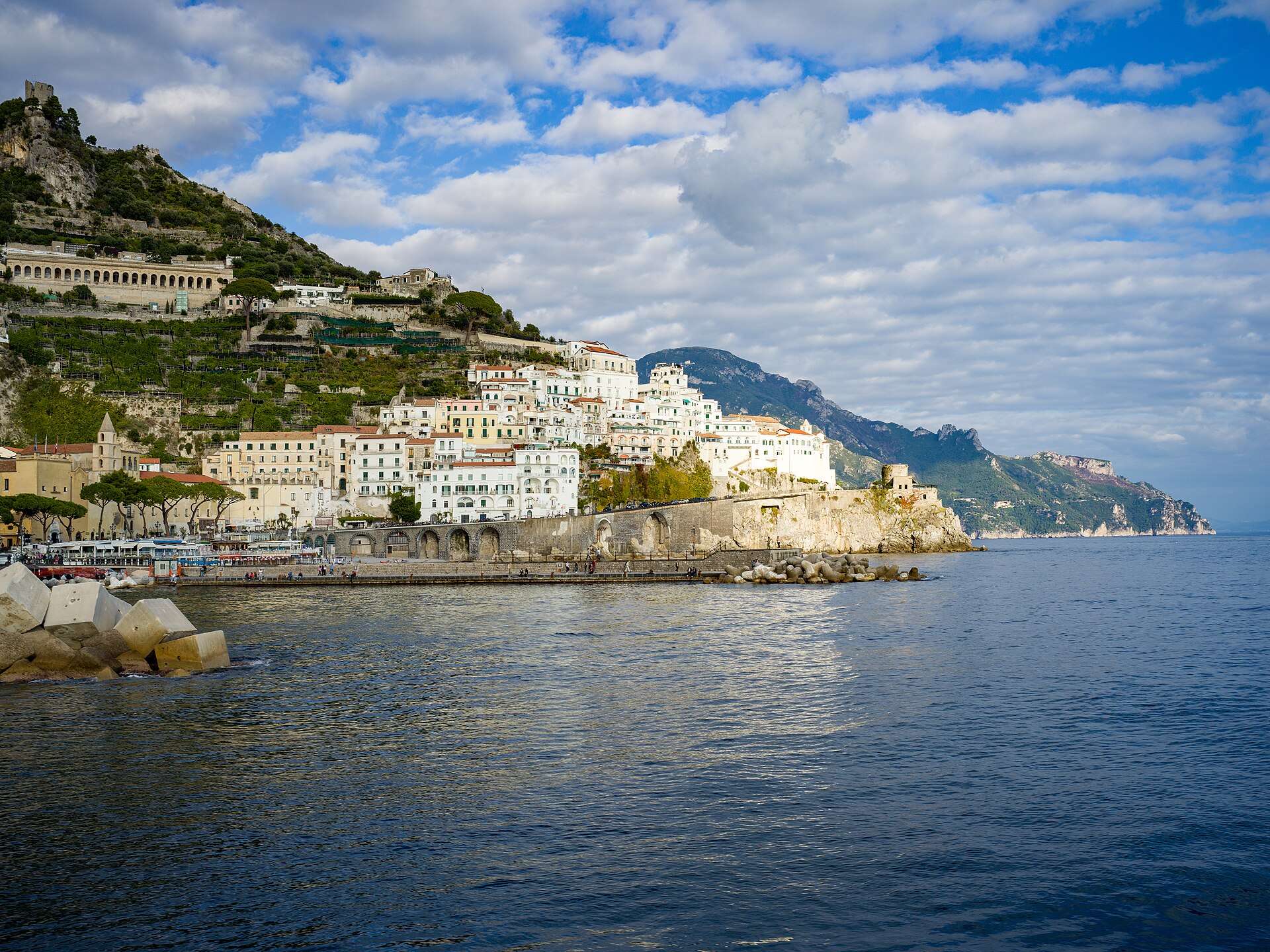
The short version
- Seasonal ferries run Naples’ Molo Beverello to Positano and Amalfi roughly April through October — about 1–1.5 hours by fast boat, €25–35 across the day’s legs, with morning departures selling out summer weekends; major operator schedules at travelmar.it and the port’s boards.
- The water route is the whole argument: the coast composed from the sea — Positano’s stacked amphitheater arriving as designed — versus the SS163’s famous switchback nausea aboard packed SITA buses; the alarm’s legend-left-ashore framing is the trip’s founding decision.
- Positano works as the morning: the beach-to-church-to-lanes triangle, the Sirenuse-postcard viewpoints on the way down (arrive by boat and you walk down first, up later — plan the gelato accordingly), and linen-shop browsing priced like the view.
- Amalfi takes the afternoon: the cathedral’s Arab-Norman staircase and cloister, the paper museum’s working watermill history, and a harborfront that remembers being a maritime republic that rivaled Venice.
- Ravello — the balcony town above Amalfi — is real and reachable by bus in 25 winding minutes, and the alarm’s sprint clause is the honest math: its gardens want hours the two-town day doesn’t hold; it heads the next-trip list instead.
- Off-season the ferries stop and the verdict inverts: the SITA bus from Sorrento or Salerno serves the committed with dramamine and patience, and this page’s standing recommendation becomes the overnight or the spring.

Getting there
Molo Beverello’s morning fast boats set the day: book ahead on summer weekends per the sell-out warning, claim deck or window right for the outbound coast, and photograph the return schedule before walking away from the quay — the last boats define the day absolutely, and missing them means the bus-and-train assembly the whole plan exists to avoid. Sea state runs the show: swell cancels sailings with refunds and without apology, so the forecast is the night-before read. Positano’s dock lands you at the beach; Amalfi’s at the harborfront — both towns start immediately.
The day
Positano first off the morning boat: up through the lanes while the day boats are still arriving — the Church of Santa Maria Assunta’s dome, the viewpoint switchbacks, the linen-and-sandal economy at window-shopping pace — then back down for a swim off Spiaggia Grande or Fornillo’s quieter sand and an early seafood lunch with the amphitheater stacked behind you. The early-afternoon ferry hop to Amalfi trades one register for another: the cathedral’s sixty-two steps and Paradise Cloister, lemon-everything in the lanes (the granita is the correct format), the paper museum for the surprising half hour, and the harborfront passeggiata. The late-afternoon boat home runs the whole coast one more time with the light lowering — the day’s second screening, included in the ticket. Ravello’s gardens, per the alarm, watch from above and wait for the overnight trip.
When to go
The ferry season is the season: April through October, with May–June and September the balance of warm water, workable crowds, and reliable sailings. July–August delivers the coast at maximum wattage and maximum density — earliest boats and booked returns are the survival kit. Outside the season the water link stops, the towns half-shutter, and the honest verdict follows the alarm: bus-based pilgrimages for the devoted, spring for everyone else. Swell days in any month convert the trip to Naples’ own pages — the forecast, not the calendar, holds the final signature.
Frequently Asked Questions
Why is this a Naples page when Rome tours sell it daily?
Distance arithmetic: from Rome it’s five-plus transit hours each way for a drive-by — the brochure fiction this network’s Rome coverage already named. From Naples the ferry makes it a genuine six-hour visit. Same coast, different math; the page lives where the truth does.
Is the ferry rough?
Fast boats on open water — most days it’s smooth scenery, swell days it’s motion-sensitive territory, and genuinely rough days cancel outright. Queasy travelers sit low and aft, watch the horizon, and take the coast view as the medicine it mostly is.
Positano or Amalfi if I choose one?
Positano for the image — the stacked pastel amphitheater is the coast’s whole brand; Amalfi for the substance — cathedral, history, and a town that exists beyond its photograph. The two-boat day per the alarm refuses the choice, which is its entire design.
What about Capri instead?
Capri (documented on this network) is its own ferry day with its own rules — grafting it onto this one produces the harbor-hopping blur this page keeps warning about. Coast day and island day, separately; the ferries make both easy from the same quay.
Can I swim?
Positano’s beaches make it natural — suit under clothes, per the coast’s standing move — and Amalfi’s harbor strand serves the afternoon dip. Water shoes spare feet on the pebbles; the €25 lounger economy is optional scenery rental either way.