Pompeii from Naples
Forty minutes around the bay, the city Vesuvius buried in AD 79 runs on named, capped tickets and one honest rule: you will not see all 44 hectares, so pick a route, carry water — and let the casts be what they are.
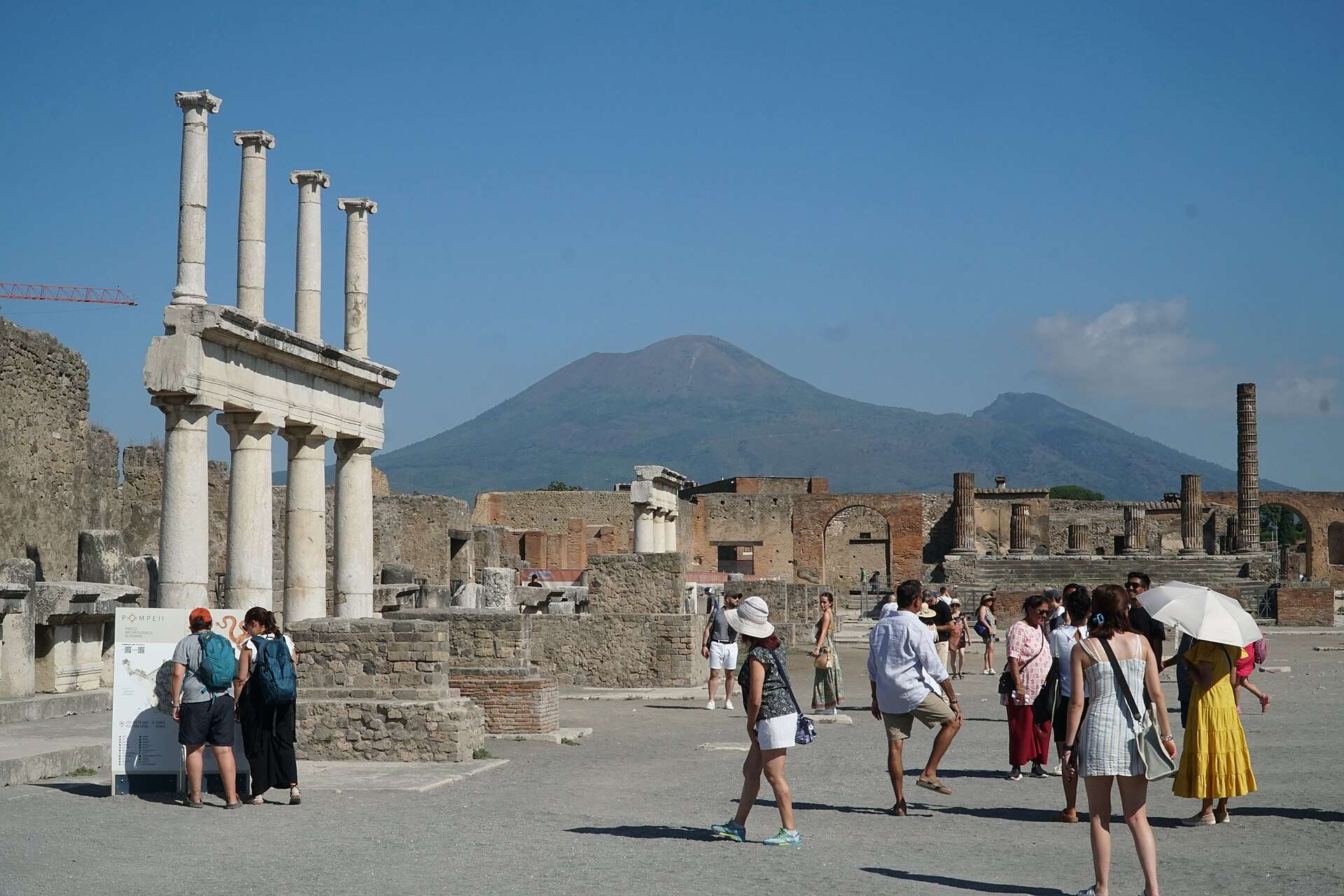
The short version
- Tickets are named and capped — 20,000 daily April through October, ID matched to the ticket at the gate — booked ahead per the alarm at pompeiisites.org, the official seller.
- The Circumvesuviana runs Naples to Pompei Scavi–Villa dei Misteri in about 35–40 minutes, dropping at the main gate; mainline FS trains serve Pompei’s town station a longer walk out — trenitalia.com covers that side.
- The scale honesty per the alarm: some 44 excavated hectares of streets, houses, and public buildings — a full Roman city, not a monument — with the pick-a-route rule as the only strategy that survives contact.
- The greatest-hits route holds: the forum under Vesuvius’ profile, the Stabian baths, the House of the Faun’s scale, the lupanar’s queue-heavy small rooms, the amphitheatre — the oldest surviving Roman amphitheatre, around 70 BC — and the Villa dei Misteri’s frescoes at the quiet far gate.
- The casts per the alarm’s register: plaster poured into the voids left by the dead in the ash — a 19th-century technique preserving final positions — displayed at several points and treated by the site, and this page, as the human record they are.
- The eruption facts run plainly: 24-plus hours of pumice fall and pyroclastic surges in AD 79, the city buried and lost until systematic excavation began in 1748 — with Herculaneum (documented on this network) as the smaller, deeper-buried, better-preserved sibling per the alarm’s own-day arithmetic.

Getting there
The named ticket per the alarm is the trip’s foundation — book the entry slot, carry the matching ID, and build the trains around it. The Circumvesuviana’s frequency makes timing easy (its rolling stock and pickpocket reputation reward the same alertness as any Naples transit); the FS alternative trades convenience for comfort. Water bottles refill at the site’s fountains — the one mercy of a shadeless city — and the gate shops sell the hat you forgot at gate prices. Guides and audio layers add real value here if anywhere: the city’s silence needs narration or preparation, and the official app covers the middle ground.
The visit
Enter at Porta Marina, take the forum first while the light rakes it — Vesuvius standing exactly where every mosaic-postcard puts it — then commit to the route you picked per the alarm. The classic loop: the forum baths’ intact ceilings, Via dell’Abbondanza’s rutted paving and painted shopfronts, the Stabian baths, the theatre quarter, and the long walk out to the amphitheatre where the seating banks still hold their 20,000 logic. The domestic register carries the visit’s weight: the House of the Faun’s footprint, the smaller houses’ larara and gardens, and the Villa dei Misteri’s frieze — the site’s greatest painting — rewarding the far-gate walk at the day’s end. The casts appear along the way in their cases and the Garden of the Fugitives; the alarm’s register applies without needing enforcement — the site’s plainness does the work. Exhaustion is the schedule’s real editor: four hours is a serious visit, six is a maximum, and the exit gate always comes as a relief the city built.
When to go
October through May runs the stones at walking temperature — spring and autumn ideal, winter’s low sun the photographers’ secret. Summer enforces every clause of the alarm at once: capped tickets tightest, shade nonexistent, water mandatory, and the earliest slot the only sane one, with the Villa dei Misteri’s end-of-day quiet as the reward for surviving the middle. Closed Mondays don’t apply here (the site runs daily with seasonal hours), but single-monument closures rotate for conservation — the official site’s daily list manages expectations before the gate does.
Frequently Asked Questions
How does the named-ticket system actually work?
You buy dated, timed entry with each visitor’s name; ID is checked against it at the turnstiles, and the April–October cap (20,000/day) makes advance booking the difference between walking in and watching others do it. Official channels only — the resale layer around Pompeii adds cost and risk to a ticket that’s straightforward at source.
Pompeii or Herculaneum if I can only do one?
The split this network already published: Pompeii for the full city’s scale — forum, streets, amphitheatre; Herculaneum for preservation depth — carbonized wood, upper floors, and a site you can actually finish. First visits usually owe Pompeii the day; connoisseurs and second visits lean the sibling. One day each, never both in one, per the alarm.
Are the casts appropriate for children?
They’re presented without gore — figures in ash-grey plaster, many at rest — and most families navigate them as the site intends: quietly. The conversation they prompt is the visit’s realest history lesson. Parents calibrate; the site’s plainness, per the alarm’s register, helps rather than hurts.
Should I add Vesuvius to the day?
The crater runs its own timed-reservation system and bus logistics, and stacking it onto a full Pompeii day produces two compromises in one afternoon. The volcano pairs better with Herculaneum’s shorter site — an arithmetic this network’s pages already keep. Pompeii warrants the whole day you booked it.
Is the Villa dei Misteri really worth the extra walk?
It holds the site’s most famous painting — the full-room initiation frieze in Pompeiian red — at the quietest gate, fifteen minutes past where most itineraries die. Fresco people treat it as the whole point; tired feet get their best second wind of the day. End there and exit by the villa gate toward the station.