15 Naples Hotels Where Caruso Died and the Monks Moved Out
The seafront grand dame where Caruso died in his suite, a Victorian marine biologist’s hotel on the hill, a 1557 Franciscan convent with a pool in its hanging gardens, and a Gio Ponti hotel from the 1950s.
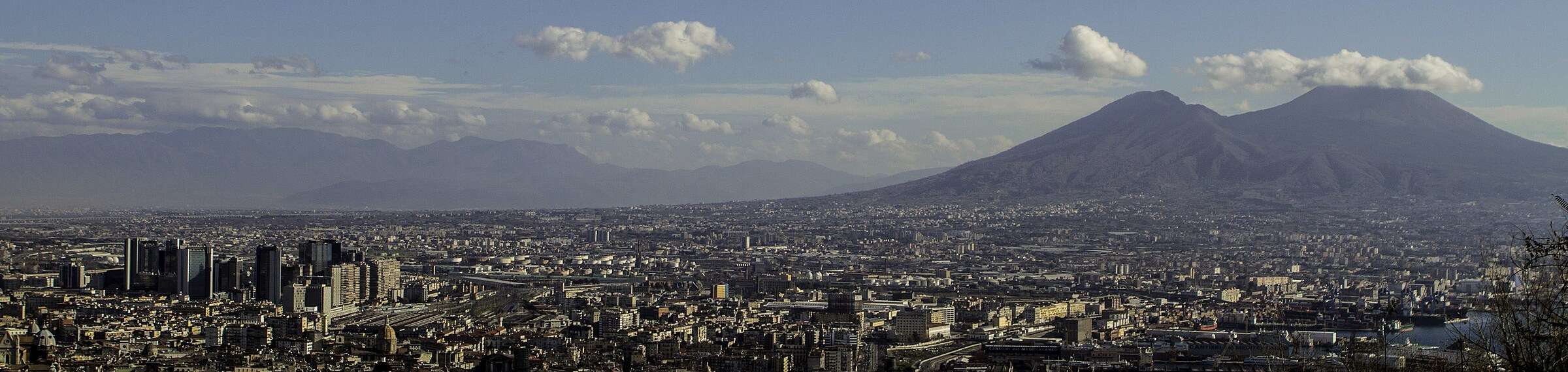
Naples puts its grand hotels on the Santa Lucia seafront and its stranger ones in convents, palazzi and a former shipping-line headquarters. This list has the Vesuvio, where Caruso died in 1921, Parker’s, bought in 1889 by a British marine biologist from the zoological station, the Franciscan convent of 1557 whose cells became rooms, and the palazzo of the last Bourbon archbishop, where breakfast is served in the Baroque salon.
The list is grouped by character, not ranked. Each hotel’s name links to its own site, so you see the current rate and book direct.
Grand dames of the Lungomare
Grand Hotel Vesuvio · Santa Lucia
The Vesuvio opened in 1882 on the Santa Lucia seafront facing Castel dell’Ovo. Enrico Caruso died in his suite here on 2 August 1921, and the rooftop restaurant carries his name. By the hotel’s account it was gutted by bombing in the Second World War, rebuilt, and reopened in 1950.
Eurostars Hotel Excelsior · Santa Lucia
The Excelsior was built in 1908 on Via Partenope, the seafront laid out on land reclaimed at the end of the nineteenth century, and is listed in the Italian Culture Ministry’s heritage catalogue. Totò, Sophia Loren and Marcello Mastroianni are among the guests the hotel’s chroniclers name. The Spanish Eurostars company runs it, which gives it its current name.
Grand Hotel Santa Lucia · Santa Lucia
The Santa Lucia is a Liberty-style seafront building associated with Giovan Battista Comencini, a leading architect of Naples’ Art Nouveau. It faces the fishing harbour of Borgo Marinari and Castel dell’Ovo across Via Partenope, and says it has taken guests on this spot since 1900.
Hotel Miramare · Santa Lucia
The Miramare was built in 1914 as a private Liberty-style villa on Via Nazario Sauro, by the hotel’s account, and converted to a hotel in 1944, with the same family running it since. The roof terrace looks at Castel dell’Ovo and across the bay to Vesuvius.
Victorian hillside and Chiaia
Grand Hotel Parker’s · Chiaia
Parker’s opened in 1870 as the Tramontano Beaurivage on the newly built Corso Vittorio Emanuele. George Parker Bidder, a British marine biologist working at the Naples zoological station, bought it in 1889 and gave it his name. It calls itself the oldest hotel in Naples.
De Bonart Naples, Curio Collection by Hilton · Chiaia
De Bonart opened as the Hotel Britannique in the 1870s, built, by the hotel’s account, for British travellers on Corso Vittorio Emanuele. It was rebuilt and reopened as a Curio Collection by Hilton hotel under the Britannique name, then renamed De Bonart Naples. Terraced gardens step down the hillside toward the bay.
Hotel San Francesco al Monte · Corso Vittorio Emanuele
San Francesco al Monte occupies the former Franciscan convent of Santa Lucia al Monte, founded in 1557 on the slope below Castel Sant’Elmo. The monks’ cells became the guest rooms, and the old hanging gardens hold a rooftop pool. It sits on Corso Vittorio Emanuele above the Quartieri Spagnoli, with the bay below.
Chiaja Hotel de Charme · Chiaia
The Chiaja occupies a floor of the palazzo of the Marchese Nicola Lecaldano Sasso La Terza on Via Chiaia, an ancestor of the family that runs it. Part of the hotel was a licensed brothel until Italy closed them in 1958, and by the hotel’s account those rooms carry the women’s names. Via Chiaia runs between Piazza del Plebiscito and Piazza dei Martiri.
Palazzi and convents of the old centre
Palazzo Caracciolo Naples, Tapestry Collection by Hilton · Centro Storico
The Palazzo Caracciolo di Santobuono on Via Carbonara has Angevin-era origins and was the seat of the Caracciolo di Santobuono princes. After years under Accor’s MGallery flag it moved to Hilton. The old courtyard is roofed in glass and serves as the lounge.
Decumani Hotel de Charme · Centro Storico
The Decumani is set in the palazzo that was the residence of Cardinal Sisto Riario Sforza, Archbishop of Naples from 1845 to 1877 and the last archbishop of the Bourbon kingdom. The breakfast room is the palazzo’s Baroque salon, lined with mirrors and gilded stucco. It stands on Via San Giovanni Maggiore Pignatelli, a few steps off Spaccanapoli.
Costantinopoli 104 · Centro Storico
Costantinopoli 104 is a Liberty-style villa on Via Santa Maria di Costantinopoli with its original Art Nouveau stained glass. It has a garden and a swimming pool inside a Centro Storico block, a rarity in the old city, and stands beside the Accademia di Belle Arti, a short walk from Piazza Bellini.
Hotel Palazzo Turchini · Piazza Municipio
The Palazzo Turchini was part of the Real Conservatorio della Pietà dei Turchini, one of Naples’ four historic music conservatories, which began in 1583 as an orphanage. The name comes from the turquoise cassocks, turchino in Italian, that the orphans wore. It stands on Via Medina, a few minutes from the Maschio Angioino.
Twentieth-century architecture
Royal Continental Hotel · Santa Lucia
The Hotel Royal was built in the mid-1950s to a design by Gio Ponti, who also designed the furniture. It later merged with the neighbouring Hotel Continental to form the Royal Continental. The rooftop pool and terrace look over Castel dell’Ovo.
ROMEO Napoli · Piazza Municipio
The Romeo occupies the former headquarters of the Lauro shipping line on Via Cristoforo Colombo, facing the port. Kenzo Tange Associates redesigned it, and it opened in 2008. It now carries the LXR Hotels & Resorts flag within Hilton.
Hotel Palazzo Esedra · Fuorigrotta
The Palazzo Esedra occupies the former Palazzo degli Uffici of the Mostra d’Oltremare, the exhibition complex inaugurated in 1940 and rebuilt after wartime damage, in Fuorigrotta. It is listed in the Italian Culture Ministry’s census of Italian architecture since 1945 and takes its name from the Fontana dell’Esedra, the monumental fountain in the complex.
Frequently Asked Questions
Are these hotels ranked?
No. The groups sort them by character, and the order within each group carries no meaning.
What made a hotel interesting enough for this list?
A story. Every entry was a seafront grand dame, a nineteenth-century house on the hill, a palazzo or convent in the old centre, or a piece of twentieth-century architecture with a name attached. Comfort alone did not qualify.
Why are there no prices?
Rates change daily and a priced list goes stale in a month. Each hotel’s name links to its own site, so you see the current rate and book direct.
Should I stay on the seafront or in the Centro Storico?
Santa Lucia and Chiaia give you the bay, the Lungomare and quieter nights. The Centro Storico puts you on Spaccanapoli among the churches and pizzerias, louder and closer to the archaeological sights. Both sit within reach of the day trips on this site.
Which hotel puts me closest to the day trips on this site?
Most day trips from Naples run to Pompeii and Herculaneum, up Vesuvius, along the Amalfi Coast, or by ferry to Capri and Ischia. The Santa Lucia and Piazza Municipio hotels sit closest to the port and the Molo Beverello ferries; the Centro Storico hotels sit closest to the Circumvesuviana for Pompeii.